
Why Aging Skin Itches — And the Hidden Role of pH
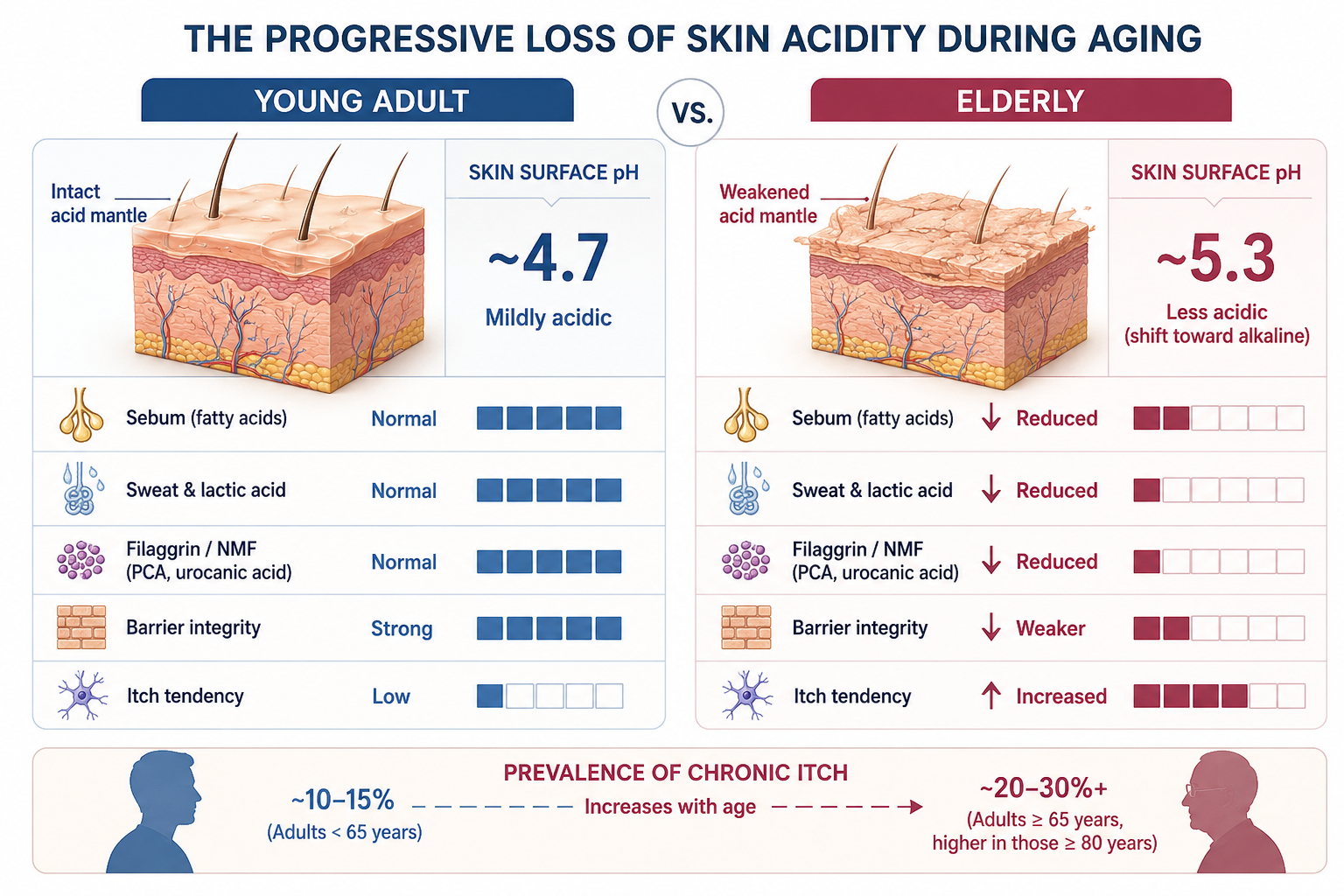
Chronic itch in older adults is routinely attributed to dry skin. But the deeper driver is a gradual loss of skin surface acidity — a biochemical shift that impairs the barrier, reshapes the microbiome, and sensitizes the nervous system over years.
The pH Problem at the Heart of Eczema
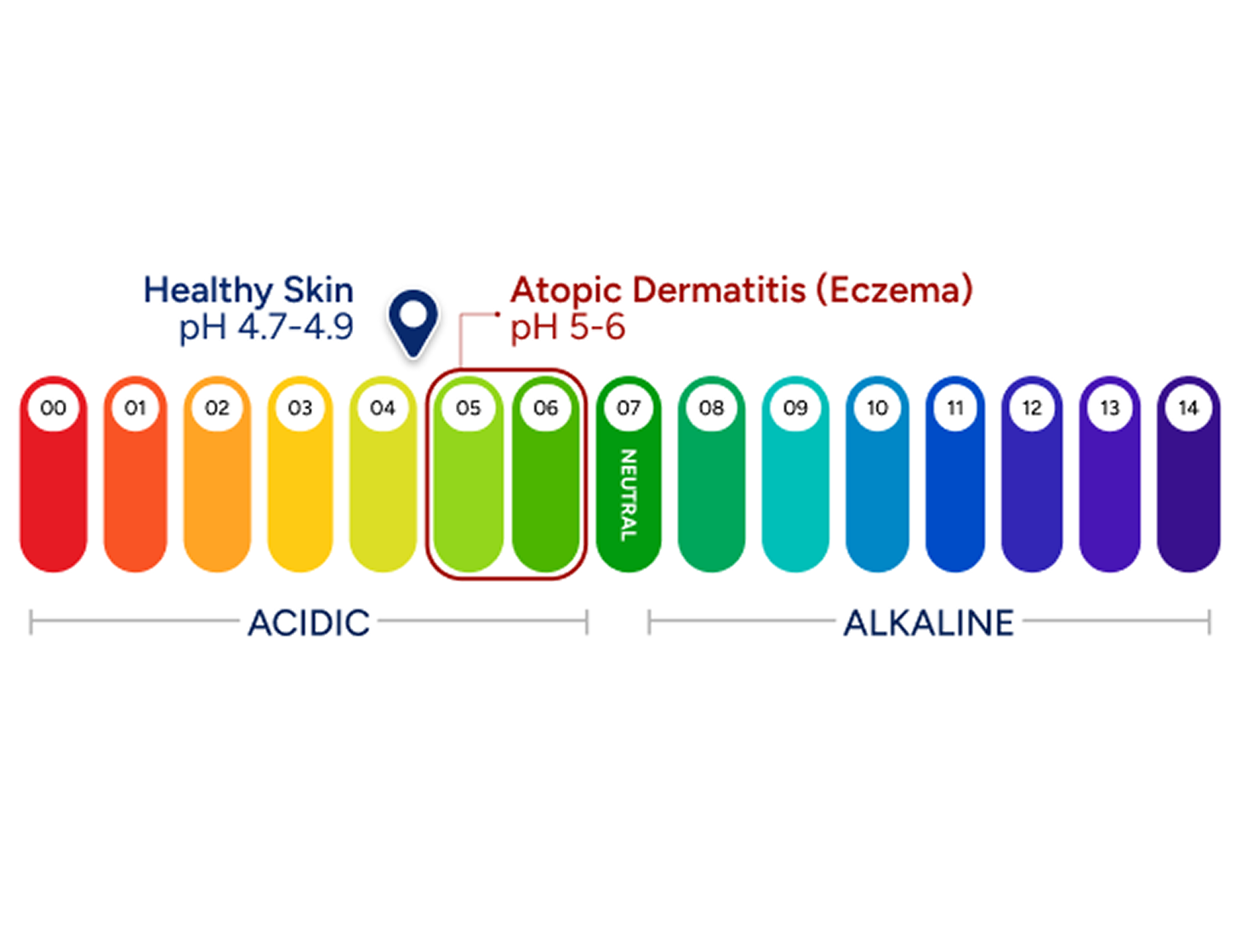
In atopic dermatitis, a single biochemical disruption — the loss of skin surface acidity — cascades into barrier failure, microbial dysbiosis, and chronic itch. Understanding and correcting it may be the missing piece in long-term disease control.
Frequently Asked Questions
Skin pH
-
Skin pH is a measure of the acidity of the skin surface. Healthy skin is naturally acidic and typically maintains a pH between 4.5 and 4.9, with approximately 4.7 considered optimal for barrier function.
This acidic environment regulates key biological processes, including lipid production, barrier repair, microbiome balance, protease activity, and immune signaling. Even relatively small increases in skin pH can disrupt these systems and contribute to skin disease.
-
Healthy skin is naturally acidic, with most measurements falling within a range of approximately 4.5–4.9. Evidence from barrier biology, microbiome research, and enzyme activity studies suggests that skin functions most effectively near pH 4.7, which we consider the optimal target for maintaining skin health.
At this pH:
Barrier-forming enzymes function efficiently
Excess protease activity is minimized
Beneficial skin microbes are favored
Inflammatory signaling is reduced
Skin barrier recovery is optimized
For these reasons, Soteri Skin treatments focus on maintaining skin surface pH as close as possible to 4.7.
-
Healthy skin maintains an acidic surface through a combination of sweat, sebum, natural moisturizing factors, and specialized biochemical processes within the epidermis. This acidity is not accidental—it is essential for proper skin function.
The skin's acidic environment helps regulate barrier formation, supports beneficial microbes, controls enzyme activity, and protects against irritation and infection. When skin pH rises above its natural range of 4.5–4.9, many of these protective mechanisms become less effective.
-
Yes. Skin pH can be influenced by age, genetics, cleansing products, environmental exposures, inflammation, and skin disease.
While healthy skin typically remains within the physiological range of 4.5–4.9, factors such as eczema, aging, excessive washing, and alkaline soaps can raise skin pH and impair normal skin function.
The Acid Mantle
-
The acid mantle is a thin acidic film that covers the surface of the skin. It is formed by sebum, sweat, natural moisturizing factors, and acidic metabolites produced within the epidermis.
Although often described as a protective coating, the acid mantle is increasingly recognized as a critical regulator of skin biology, helping maintain barrier integrity, microbiome balance, enzyme activity, and immune homeostasis.
-
The acid mantle helps maintain the skin within its optimal pH range of 4.5–4.9. By doing so, it supports multiple functions essential for healthy skin, including:
Barrier formation and repair
Ceramide production
Microbiome regulation
Control of protease activity
Protection against pathogens
Regulation of inflammation and itch
Disruption of the acid mantle can contribute to dryness, irritation, eczema, and other inflammatory skin conditions.
-
The acid mantle and skin barrier are closely interconnected. Many enzymes responsible for producing ceramides and organizing the skin barrier function best within the acidic range of 4.5–4.9, with activity often peaking near pH 4.7.
When skin pH rises, these enzymes become less efficient, slowing barrier repair and increasing susceptibility to irritation, inflammation, and moisture loss.
Eczema and Skin Disease
-
Yes. Numerous studies have shown that individuals with atopic dermatitis (eczema) often have elevated skin surface pH compared with healthy individuals.
Higher skin pH can activate proteases, impair barrier repair, promote microbial imbalance, and increase inflammatory signaling. These changes contribute to the cycle of itching, inflammation, and barrier dysfunction that characterizes eczema.
-
Several factors contribute to elevated skin pH in eczema, including:
Genetic barrier defects
Reduced filaggrin expression
Loss of natural moisturizing factors
Chronic inflammation
Microbiome alterations
Frequent washing and exposure to alkaline products
These factors impair the skin's ability to maintain its natural acidity, making it more vulnerable to irritation and flare-ups.
-
Proteases are enzymes that help regulate normal skin shedding and renewal. However, when skin pH becomes elevated, certain proteases—particularly kallikreins such as KLK5 and KLK7—become overactive.
Excessive protease activity can damage the skin barrier, trigger inflammation, activate itch pathways, and worsen eczema symptoms.
-
Yes. Elevated skin pH can activate proteases and inflammatory pathways that stimulate sensory nerves within the skin.
These signals can contribute to chronic itch, particularly in conditions such as atopic dermatitis, dry skin, and age-related pruritus.
-
Modern research suggests that eczema is both a barrier disorder and an immune disorder.
Many scientists now believe that barrier dysfunction often occurs early in disease development, allowing irritants, allergens, and microbes to penetrate the skin and trigger immune activation. This is why therapies that support barrier restoration have become an increasingly important part of eczema management.
Aging Skin and Chronic Itch
-
Yes. Numerous studies have shown that individuals with atopic dermatitis (eczema) often have elevated skin surface pH compared with healthy individuals.
Yes. Studies have shown that skin surface pH tends to become more alkaline with age, moving away from the physiological range of 4.5–4.9.
As skin pH rises above the optimal level of approximately 4.7, barrier repair slows, protease activity increases, microbiome composition changes, and chronic itch becomes more common. This age-related alkalinization is increasingly recognized as an important contributor to skin aging and age-associated skin disorders.
-
As skin ages, it produces fewer lipids and natural moisturizing factors while barrier repair becomes less efficient. At the same time, skin surface pH often increases.
These changes can lead to increased water loss, dryness, irritation, and chronic itch. Restoring the skin's natural acidic environment may help support barrier function and improve skin comfort.
-
Emerging research suggests that elevated skin pH may contribute to age-related itch by increasing protease activity, altering the skin microbiome, impairing barrier function, and activating itch-promoting pathways.
While aging is a complex process with many contributing factors, skin pH appears to be an important and potentially modifiable component.
Soteri Labs Research
-
Soteri Labs focuses on skin pH because it sits at the intersection of multiple biological systems that determine skin health, including barrier function, microbiome balance, enzyme activity, inflammation, and sensory nerve signaling.
Research suggests that even relatively small shifts in skin pH can influence many of the pathways involved in eczema, chronic itch, skin aging, and other inflammatory skin conditions.
-
Soteri Labs considers pH 4.7 to be the optimal skin surface pH because it sits near the center of the physiological range found in healthy skin (4.5–4.9) and supports multiple biological processes simultaneously.
At approximately pH 4.7:
Ceramide-producing enzymes operate efficiently
Barrier repair is accelerated
Kallikrein protease activity remains controlled
Beneficial skin microbes are favored
Inflammatory and itch-promoting pathways are reduced
Rather than simply targeting an acidic pH, our research focuses on maintaining skin as close as possible to this biologically optimal range.
-
pH/LOCK® is Soteri Skin's patented skin pH correction technology designed to restore and maintain skin surface pH near 4.7, the level associated with optimal barrier function and microbiome balance.
Unlike products that temporarily lower pH, pH/LOCK® is engineered to sustain the skin within the physiological range of 4.5–4.9 for extended periods following application, helping support long-term barrier recovery.
-
Yes. Research has shown that many of the enzymes responsible for producing ceramides and organizing the skin barrier function best within the skin's natural acidic range of approximately 4.5–4.9, with activity often peaking near pH 4.7.
By restoring skin to this physiological range, barrier repair mechanisms can function more effectively, helping improve hydration, resilience, and overall skin health.
-
Soteri Labs is the research and development division behind Soteri Skin. Our mission is to advance the scientific understanding of skin pH, the acid mantle, barrier biology, microbiome regulation, and inflammatory skin disease.
Through scientific research, educational resources, and technology development, Soteri Labs seeks to better understand how maintaining skin within its optimal physiological pH range can support long-term skin health.